
Family-owned · Denver Local
Mechanical HVAC Installation and Maintenance in Colorado
Call directly(303) 304-9997Instant Quote
Your estimate starts here.
We'll follow up within one business day. No pressure, no upsells.
Overview
Why Choose Complete Estate Care for Mechanical HVAC Installation and Maintenance in Colorado
Mechanical HVAC installation and maintenance in Colorado is an altitude problem before it is an equipment problem, and that is the part most installers get backwards. A furnace or air conditioner sized off a sea-level chart runs rich and inefficient once you get it above 5,000 feet, and the long, cold Front Range and mountain winters punish a system that was never set up for the elevation. Joe Slota at Complete Estate Care sizes the system to your actual home and climate zone, installs it to code with the mechanical permit and inspection handled, and tunes it for the altitude so it runs clean from the first cold snap. Complete Estate Care is a Division of Complete Estate Care LTD, a licensed general contractor, so the install and the paperwork line up. Call Joe at (303) 304-9997 for a free on-site HVAC assessment.
What drives the scope and cost of an HVAC job is the home and the load, not the model number on the box. A new high-efficiency furnace for a single-family home near Evergreen is a very different job from a rooftop unit on a commercial building or a full system replacement for an HOA managing dozens of units up in Grand County. Square footage, ductwork condition, elevation, fuel type, and whether you are replacing or building new all change the picture. We handle new system installations and ongoing maintenance for homeowners, HOAs, property management companies, and commercial properties, and we scope every job on the home in front of us. Contact Complete Estate Care for an accurate estimate.
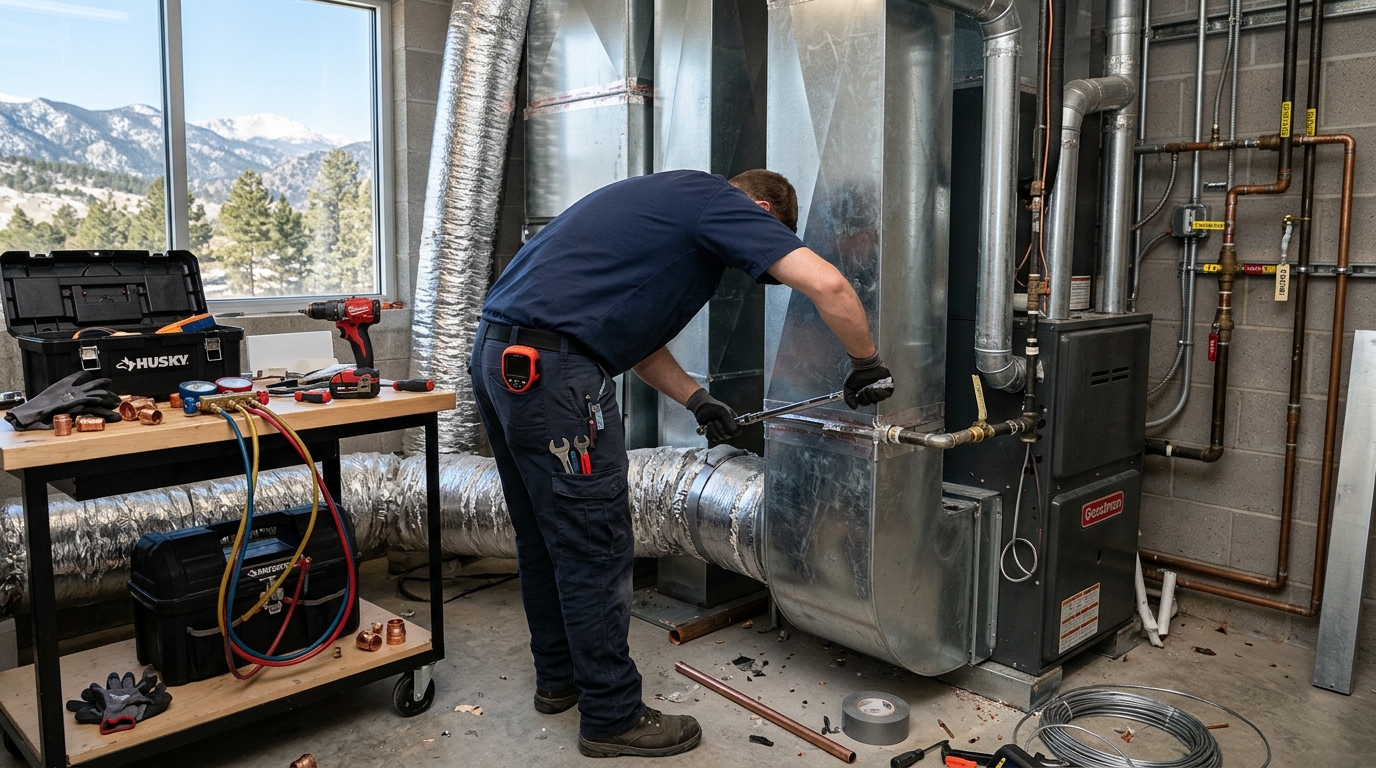
New high-efficiency furnace and condenser being installed in a Colorado home with mountains in the background
Mechanical HVAC: Size It for the Altitude, Not the Catalog
A mechanical HVAC install starts with a load calculation, not a catalog, and in Colorado the altitude changes the math before anything else does. Combustion and cooling output both fall with thinner air, roughly 4 percent for every 1,000 feet of elevation, so a furnace rated at a sea-level test bench is already down meaningful capacity by the time it is running in the foothills, and a gas unit needs its orifices and manifold pressure adjusted for high-altitude combustion or it runs rich, sooty, and short-lived. The bigger mistake is oversizing. An installer who rounds up to be safe hands you a system that blasts to temperature, shuts off, and short-cycles all winter, which burns more fuel, wears the equipment out faster, and never dehumidifies or circulates evenly. Joe runs the numbers on your actual home, square footage, insulation, window area, duct condition, and elevation, then sizes the equipment to match. That is the difference between a system that holds a steady temperature on a below-zero Front Range night and one you fight with every January.
New HVAC System Installation: Furnaces, AC, and Cold-Climate Heat Pumps
New HVAC installation in Colorado covers heating, cooling, and increasingly both in one system, and the right choice depends on your home, your fuel, and what the elevation and climate zone actually demand. Here is what a new install looks like done correctly:
High-efficiency furnaces, set up for altitude
For most Colorado homes heating is the dominant load, and a modern condensing gas furnace is still the workhorse. The install that lasts is the one that gets the high-altitude derate and combustion setup right: correct orifice sizing, manifold pressure, and combustion-air provisions so the unit burns clean at elevation. We size to a real load calculation, set the gas pressure for the altitude, and commission the unit instead of lighting it and leaving.Air conditioning and cold-climate heat pumps
Front Range summers have gotten hot enough that central air is no longer optional on a lot of homes, and cold-climate heat pumps have matured to the point that they hold useful output well below freezing, which makes them a real option in Colorado where they were not a decade ago. Pairing a heat pump with a gas furnace as a dual-fuel system lets the home run on the heat pump through the shoulder seasons and fall back to gas when it is genuinely cold. Many of these systems qualify for Xcel Energy and utility rebates, which we factor into the estimate.Ductwork, zoning, and commissioning
The best equipment on bad ductwork underperforms. We check duct sizing, sealing, and return air, because a system starved for return or leaking into an unconditioned attic never hits its rated efficiency. New installs are permitted and inspected, and we commission the system, measuring airflow and temperature rise, so you know it is doing what it was sized to do.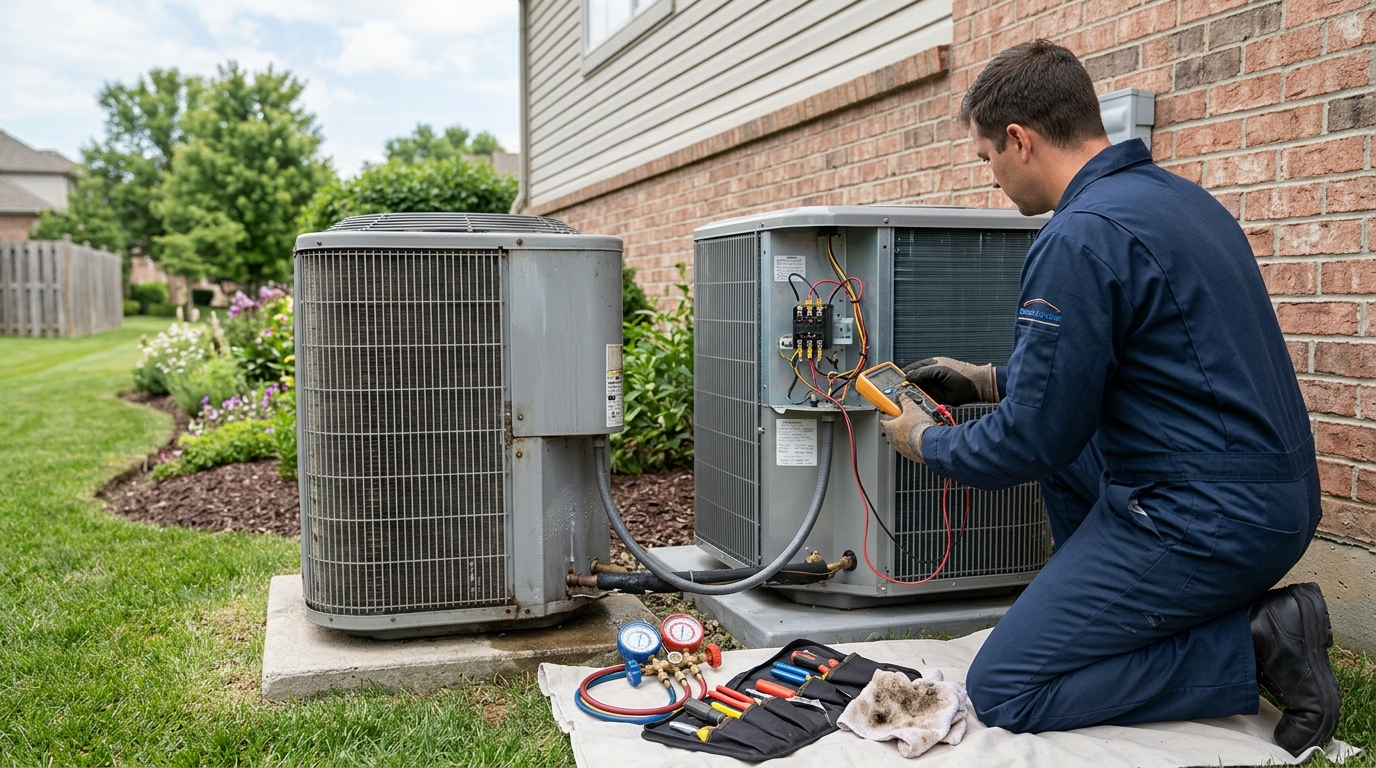
HVAC Maintenance: The Tune-Up That Keeps a Colorado System Alive
Maintenance is where a Colorado HVAC system earns back its install cost, because the two things that shorten equipment life here, altitude combustion and dry, dusty mountain air, are exactly what a seasonal tune-up catches before they become a failure.
A real maintenance visit is not a filter swap and a sticker. We inspect and clean the heat exchanger and burners, check combustion and gas pressure for the altitude, test the ignition and safety controls, clean the condenser and evaporator coils, check refrigerant charge and airflow, and verify the system cycles and holds temperature. On the heating side, a cracked heat exchanger is a carbon-monoxide risk, so that inspection is not optional. For homeowners we recommend a heating check in the fall and a cooling check in the spring. For HOAs and commercial buildings we set up a maintenance schedule across every unit so nothing gets missed and the whole property stays documented.
"Most no-heat calls in January trace back to something a fall tune-up would have caught in October. The maintenance is cheap. The emergency replacement on the coldest week of the year is not."If your system is overdue for service or you want it looked at before the season turns, call (303) 304-9997 and we will get it on the schedule.
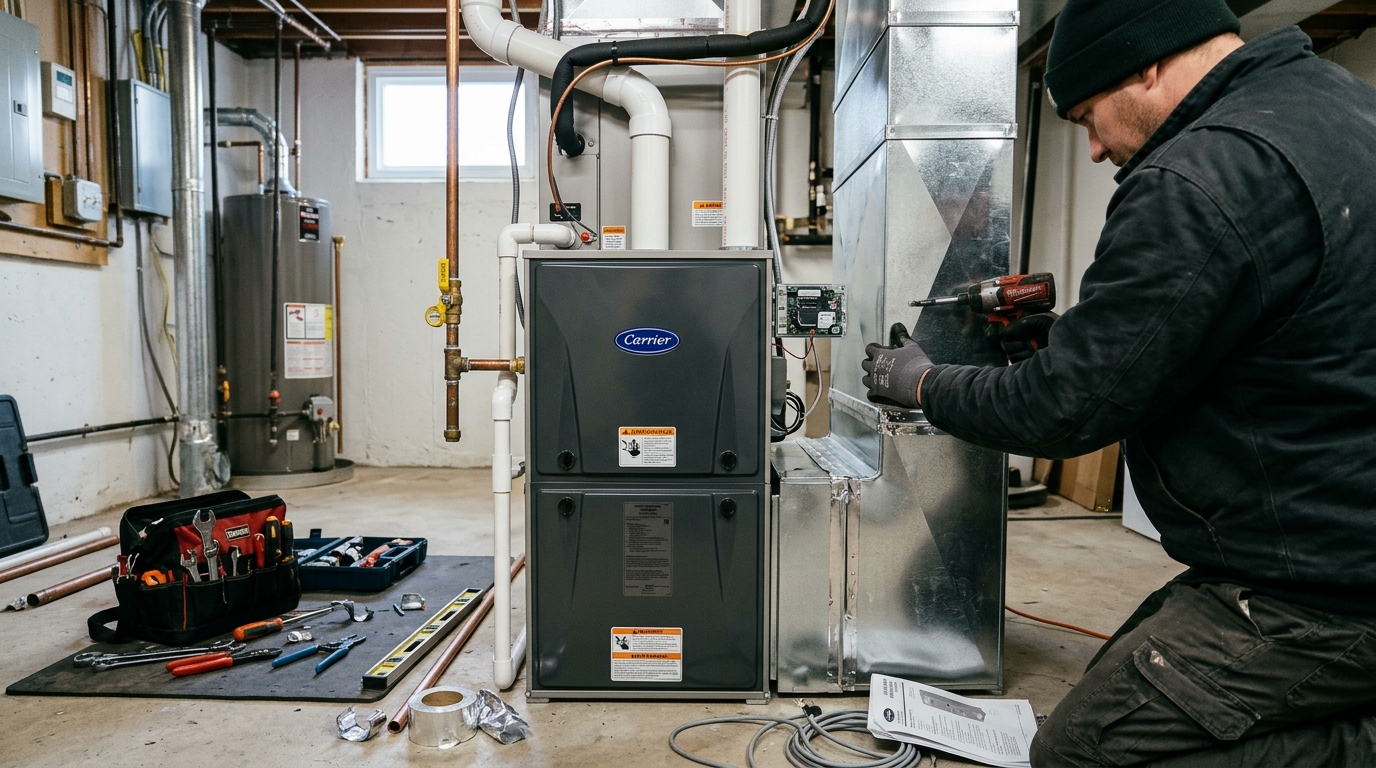
HVAC technician servicing and cleaning the burners of a gas furnace during a maintenance tune-up in a Colorado basement
Who We Install and Maintain For: Homeowners, HOAs, Property Management, and Commercial
We install and maintain mechanical HVAC for four kinds of client, and each one needs the work scoped a little differently.
Homeowners
Single-family and mountain homes, from a straight furnace replacement to a full heating and cooling system on a new build. We size it to your home, set it up for your elevation, and keep it running with seasonal maintenance so you are not buying a new system every ten years.
HOAs
An association managing dozens of units does not want dozens of separate conversations. We handle bulk installs and set up a maintenance schedule across the whole property, with documentation the board can hand to its members and its insurer.
Property management
For the properties you manage, one point of contact instead of a different vendor at every building. We handle installs and ongoing maintenance across your portfolio and keep the service records documented for owners and tenants.
Commercial properties
Rooftop units, light commercial systems, and the maintenance plans that keep them from failing at the worst possible time. We scope commercial work the same way we scope a home: on the building in front of us, with the permit and inspection handled.
Key Facts: What Drives a Colorado HVAC Install
The facts below come from how HVAC equipment actually behaves at Colorado elevation and in a Front Range winter. Each one drives a specific decision on your install or your maintenance plan.
High-altitude combustion needs a gas setup, not defaults
Colorado winters make heating the primary load
Cold-climate heat pumps are finally a real Colorado option
An oversized system costs more and lasts less
Maintenance is what keeps a system alive at altitude
Protection Cost Estimate
Get Your Free HVAC Assessment
Joe assesses every system personally, sizes it for your home and your elevation, installs it to code with the permit and inspection handled, and sets up the maintenance that keeps it running. No call center, no guesswork on the sizing, no oversized unit you will fight all winter. Call (303) 304-9997 or request a free quote to get on the schedule.
Call (303) 304-9997 Free · No obligation
Or send us your info
FAQ Common questions
Frequently Asked Questions
Answers below
Do I need a bigger furnace because of Colorado's altitude? +
No, and oversizing to compensate for the altitude is one of the most common HVAC mistakes in Colorado. Equipment output does fall with elevation, roughly 4 percent for every 1,000 feet, but the fix is a correct load calculation and a high-altitude combustion setup, not a bigger box. A furnace that is sized too large short-cycles, blasts to temperature and shuts off, burns more fuel, wears out faster, and never heats evenly. We size to your actual home and then set the gas orifices and manifold pressure for your elevation so the unit burns clean and holds a steady temperature.
How often should HVAC be serviced in Colorado? +
Twice a year for most homes: a heating check in the fall before the first cold snap and a cooling check in the spring before summer. Colorado's dry, dusty air loads filters and coils faster than a humid climate, and at altitude a gas furnace runs closer to the edge of clean combustion, so a system here drifts out of tune faster than the same unit at sea level. A real tune-up inspects and cleans the heat exchanger and burners, checks combustion and gas pressure for the altitude, tests the safety controls, and verifies airflow and refrigerant charge. Most January no-heat calls trace back to something a fall visit would have caught.
Can a heat pump handle a Colorado winter? +
Yes, with the right equipment. Cold-climate heat pumps have matured to where they hold useful heating output well below freezing, which makes them a genuine option in Colorado where they were not a decade ago. For the coldest stretches, a dual-fuel setup pairs the heat pump with a gas furnace so the home runs on the efficient heat pump through the shoulder seasons and falls back to gas when it is genuinely cold. Many of these systems qualify for Xcel Energy and utility rebates. We will tell you honestly whether a heat pump, a dual-fuel system, or a straight high-efficiency furnace is the right fit for your home and elevation.
Do you install and maintain HVAC for HOAs, property managers, and commercial properties? +
Yes. We install and maintain mechanical HVAC for homeowners, HOAs, property management companies, and commercial properties. For an HOA, that means bulk installs and a maintenance schedule across every unit, with documentation the board can hand to its members and its insurer. For a property manager, it means one point of contact across the portfolio and service records kept for owners and tenants. For commercial buildings, that means rooftop units, light commercial systems, and maintenance plans that keep them from failing at the worst possible time. We scope a commercial, HOA, or managed-property job the same way we scope a home, on the building in front of us, with the permit and inspection handled.
Do you pull the permit and inspect a new HVAC install? +
Yes. New HVAC installs are permitted and inspected, and because Complete Estate Care is a Division of a licensed general contractor, the install and the paperwork line up. We also commission the system after install, measuring airflow and temperature rise, so you have proof it is performing to the load it was sized for. That record matters for a homeowner's resale and for an HOA or commercial owner answering to a board or an insurer.
Should I repair or replace my HVAC system? +
Replace when the system is past about 15 years, needs a repair that approaches the cost of a new unit, or can no longer hold temperature on a cold Front Range night, and especially if a heating inspection finds a cracked heat exchanger, which is a carbon-monoxide risk. Repair when the system is younger, the fault is a single failed component like an igniter or a capacitor, and the rest of the unit has life left. We make that call on what the equipment is actually doing, not on which job is bigger, and if a new system makes sense we will show you where the efficiency and rebate math lands before you commit.