
Family-owned · Denver Local
Siding Repair in Colorado, Fixed to Resist Hail and Fire
Call directly(303) 304-9997Instant Quote
Your estimate starts here.
We'll follow up within one business day. No pressure, no upsells.
Overview
Why Choose Complete Estate Care for Siding Repair in Colorado, Fixed to Resist Hail and Fire
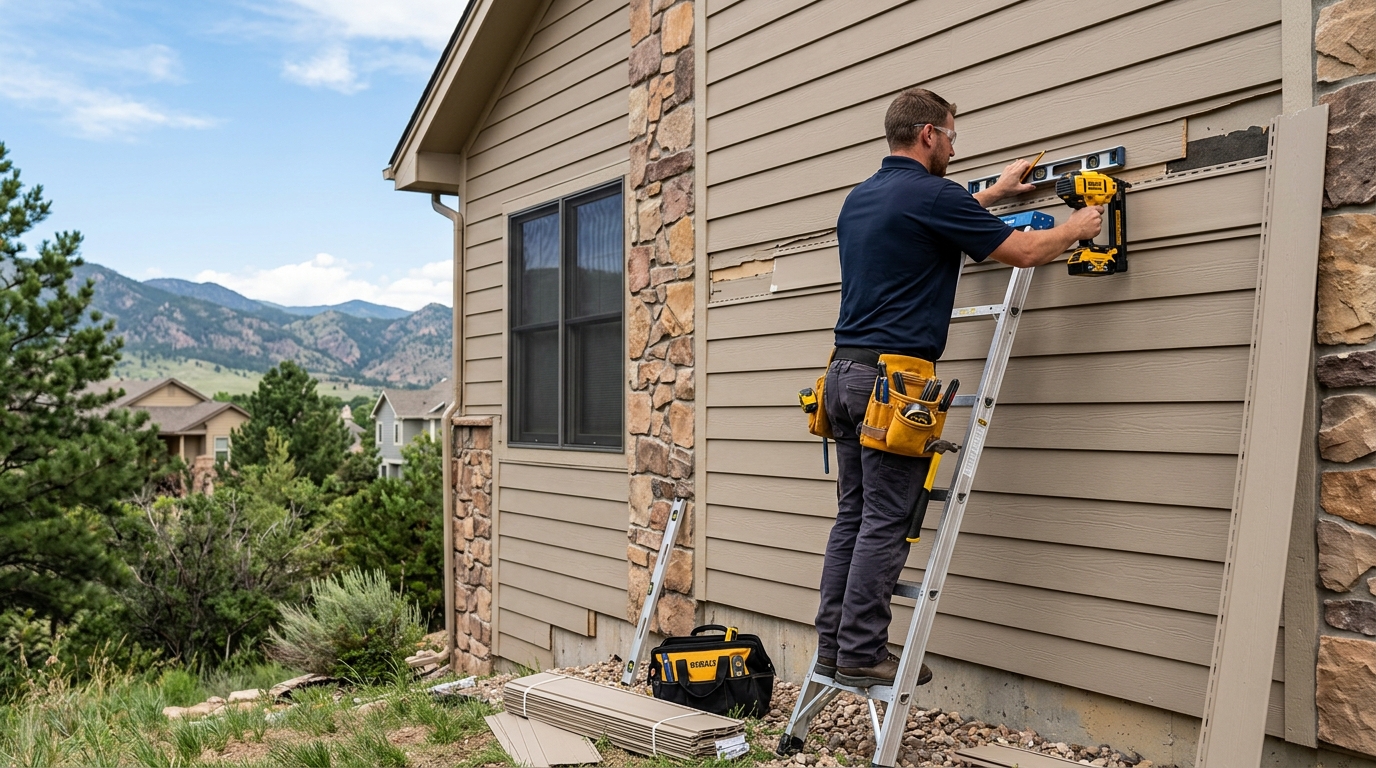
Siding repair in Colorado is a weather-and-fire problem before it's a cosmetic one, and that's the part most contractors miss. Your siding cracked, faded, or pulled loose because hail battered it, high-altitude UV cooked it, or freeze-thaw worked it loose over the winters, and now the exposed wall behind it is taking water and, in a wildfire, embers. Joe Slota at Complete Estate Care assesses what actually failed and why, repairs it to hold against the next storm cycle, and, where the damage sits in the first 5 feet around the structure, guides you toward fire-resistant materials instead of putting combustible cladding right back where embers collect. Complete Estate Care is a Division of Complete Estate Care LTD, a licensed general contractor, so the repair and the paperwork line up. Call Joe at (303) 304-9997 for a free on-site siding assessment.
What drives the scope and cost of a siding repair is the cause and spread of the damage, not the wall area alone. A few hail-cracked vinyl panels on a newer home is a very different job from UV-brittled cladding failing across a whole south-facing elevation, or combustible siding sitting in the 5-foot noncombustible zone that an insurer is now flagging near Evergreen or up in Grand County. Siding material, elevation exposure, how much wall is affected, and whether the damage is a covered storm loss all change the picture. Repairing the siding is also part of hardening the structure against wildfire, because the lower wall is exactly where wind-blown embers pile up. Every wall is different. Contact Complete Estate Care for an accurate estimate.
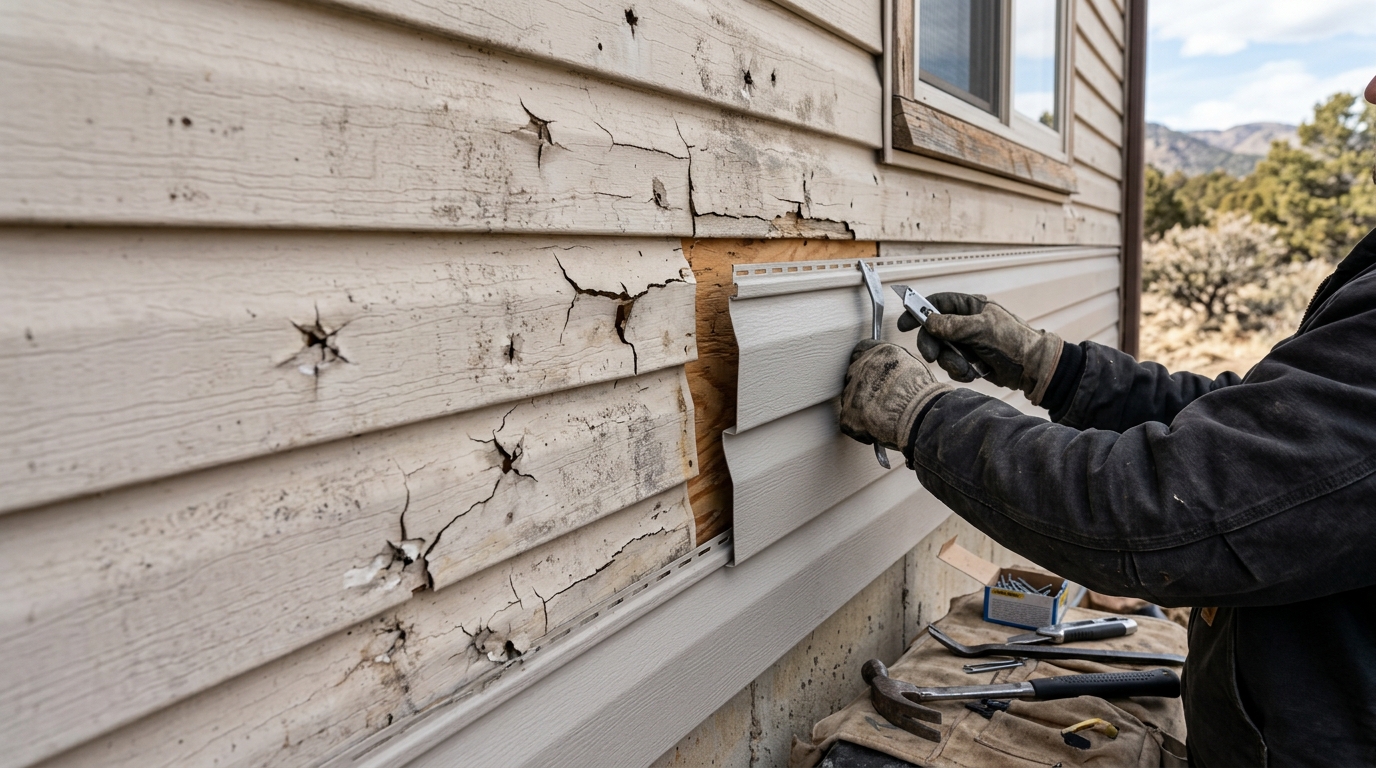
Hail-cracked and UV-faded vinyl siding panels on the north elevation of a Colorado Front Range home
Siding Repair: Find Why the Panel Failed Before You Replace It
A siding repair starts with finding why the panel failed, and on the Front Range the answer is almost always weather, not workmanship. A straightforward repair (a handful of hail-cracked vinyl panels, a section of wind-loosened lap siding, a run of caulk-failed butt joints) runs a few hours once the material's on site and matched. But the diagnosis comes first. Joe checks the wall behind the damaged cladding for water staining, soft sheathing, and hidden rot, because siding is a rain screen and once it's breached the real damage is behind it. Here's the frame nobody selling "siding repair services" will hand you: the cracked panel you can see is a symptom, and the hail or UV damage that caused it is usually spread across the whole elevation that faced the storm or the afternoon sun. Fix the one panel and ignore the field damage around it, and you're back at the wall after the next hailstorm. We repair the failure and flag the surrounding damage so you know whether you're looking at a spot fix or a covered claim.
Hail, Altitude UV, and Freeze-Thaw: Why Colorado Siding Fails
Most siding failures on Colorado homes trace back to three forces, usually working together, and each one gets repaired differently. Naming the cause correctly is what makes a repair hold and what makes a claim stick. Here's what we're actually looking for on the wall:
Vinyl siding repair: hail cracks the north and west faces first
Vinyl siding gets brittle as it ages and then shatters on impact. A Front Range hailstorm punches holes and spider-cracks straight through cold vinyl, worst on the north and west elevations that face incoming storms. Vinyl siding repair means matching panel profile and color (sun-faded vinyl almost never matches new stock, so blending is its own skill), replacing the cracked courses, and re-locking the panels so wind can't lift them. We document the cracked runs by elevation because that's exactly what a hail adjuster looks for.UV degradation: why Colorado siding ages faster than the label says
Colorado's high-altitude UV is brutal on cladding. At 5,000-plus feet the Front Range gets meaningfully more ultraviolet exposure than sea-level cities, and it fades, chalks, and embrittles vinyl and painted wood faster than manufacturers' flatland ratings assume. South and west walls take the worst of it. UV-degraded siding cracks under the next hail hit or wind event that fresh cladding would have shrugged off, so age plus exposure is why one storm takes out a whole elevation.Freeze-thaw and wind: the damage that loosens fasteners and joints
Freeze-thaw is the quiet one. Colorado swings from sunny afternoons to hard overnight freezes, and that daily cycling works fasteners loose, cracks caulk at joints and penetrations, and lets water wick behind lap siding and fiber-cement. Once water is behind the cladding it freezes, expands, and pries the panel further off the wall. Wind-loosened and freeze-cracked siding is the most-missed source of hidden wall rot on Front Range homes.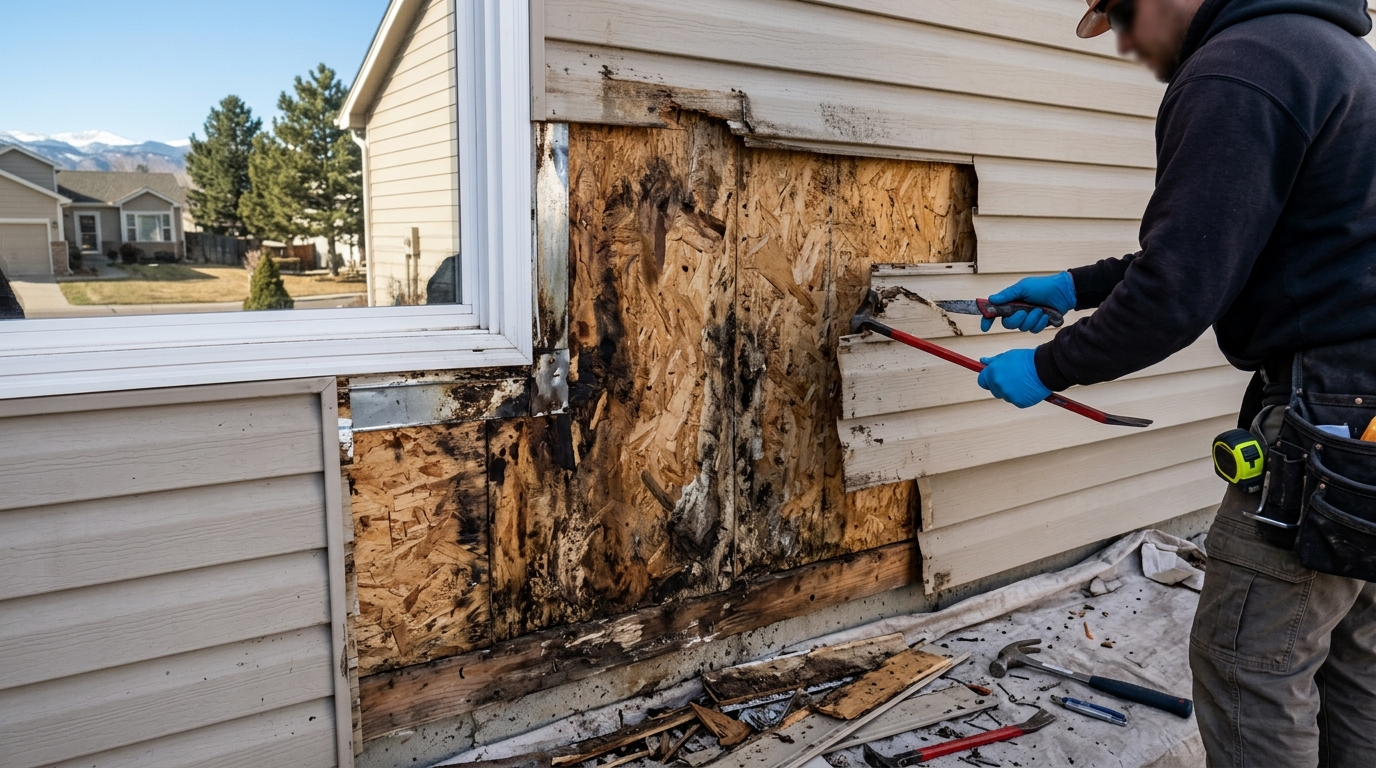
Wind-driven water staining and hidden sheathing rot exposed behind failed siding on a Colorado home
Fire-Resistant Siding and the 5-Foot Noncombustible Zone
Here's the part that makes a Colorado siding repair different from a repair anywhere else, and it's the angle a general handyman will never raise: the bottom few feet of your siding is the single most fire-vulnerable strip of cladding on the house.
That first 5 feet is what fire researchers and Colorado's home hardening guidance call the noncombustible zone (Zone 0), and vinyl siding is one of the worst materials to have in it. Vinyl doesn't just burn, it melts and drops away from radiant heat well before flames arrive, exposing the sheathing and framing behind it to direct ignition. So when we repair siding that sits in that zone, the honest recommendation is often not to reinstall the same combustible panel. Replacing the lowest 12 to 18 inches of wall cladding above grade with fiber-cement, stucco, or another noncombustible material is a targeted, affordable way to close the ember-entry gap without re-siding the whole house.
"If your siding repair is in the first 5 feet of wall and the contractor's plan is to nail vinyl right back on, they're rebuilding the ember problem you just paid to open up. That strip is where the fire gets in."
This is the same logic behind the home hardening work: the wall is part of the ignition system, not just the finish. If your siding needs repair anyway, it's the right moment to harden the zone that matters most. Call (303) 304-9997 and we'll assess the wall and the zone together.
Fire-Resistant Siding Materials That Hold Up in Colorado
When part of a wall has to be replaced anyway, what goes back on matters as much as what came off. Fire-resistant siding materials for the noncombustible zone share one trait: they don't ignite, melt, or feed a fire when embers land against them. On the Front Range the shortlist is consistent:
Fiber-cement: noncombustible and hail-tough
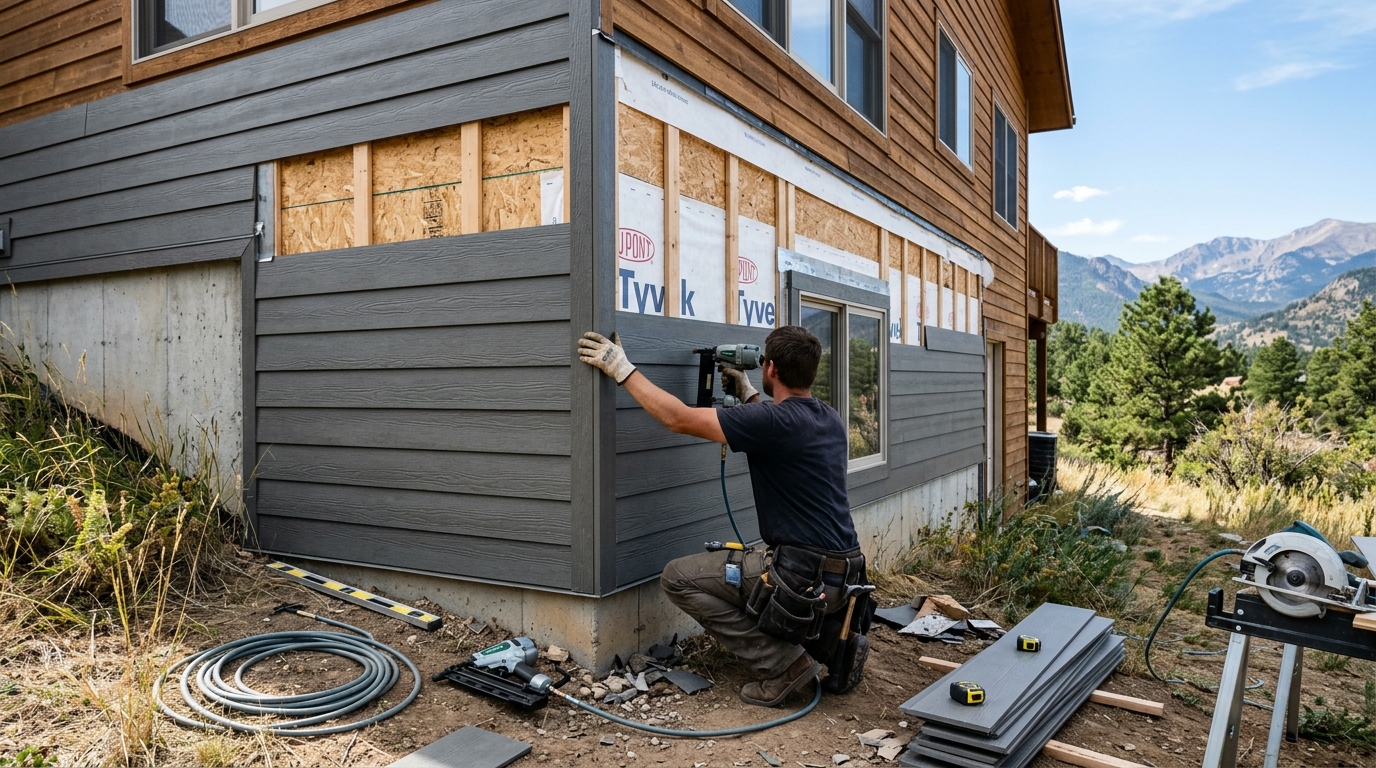
Fiber-cement (such as HardiePlank) is noncombustible, holds up to hail far better than vinyl, and carries Colorado's UV without the fade-and-embrittle problem. It's the workhorse replacement for combustible cladding in the 5-foot zone and on any elevation that keeps failing.Stucco, brick, and stone veneer for the base course
Stucco, brick, and stone veneer are all noncombustible and give the lower wall a hard, ember-proof surface. They're a strong choice for the base course and for the walls facing the highest wildfire exposure, especially uphill elevations where fire and embers arrive first.Targeted base-course swap over full re-siding
Where full re-siding isn't practical or in the budget, replacing just the lowest 12 to 18 inches of cladding above grade with a noncombustible material is the highest-value targeted fix. It closes the ground-level ember gap for a fraction of the cost of the whole wall. Fiber-cement lap siding installed on the lower wall of a Colorado home as a fire-resistant replacement for combustible cladding
When a Repair Is the Wrong Call (and When It's Exactly Right)
When siding repair is the wrong call, and when replacement is: if your cladding is more than one hail season old across every elevation, the vinyl is chalky and brittle everywhere you press on it, and you're patching a new cracked panel every storm, a repair is money spent to delay the inevitable. At that point a partial or full re-side is the honest recommendation, and if the damage traces to a documented storm it may be a covered loss anyway. We'll tell you when you've crossed that line instead of selling you a patch that buys one season. The flip side: if your siding is sound and the damage is isolated to one storm event or one failed section, a repair is exactly right and there's no reason to let a contractor talk you into re-siding a wall that has years left. The one exception we'll always raise is the 5-foot zone. Even a small repair there is worth doing in noncombustible material, because that strip carries fire risk a cosmetic patch ignores.
Storm Damage, Insurance, and the Documentation That Gets Paid
On many Colorado siding jobs, the repair and the insurance claim are one conversation. Getting the documentation right is the difference between a paid claim and a denied one:
Siding damage documentation adjusters accept
Colorado hail and wind damage to siding is frequently a covered loss, but siding is one of the most commonly missed line items on a claim because the dents and cracks hide on the north and west faces. We photograph impacts per elevation, record cracked and holed panels, and write a clean scope that matches what an adjuster looks for. No padding, no misrepresenting scope, just an honest, defensible record of what the storm did to the walls.Wind-and-hail deductibles and whether to file
Most Colorado homeowner policies carry a separate, higher wind-and-hail deductible, so knowing the true extent of the siding damage before you file matters. We assess whether the wall damage, combined with any roof and gutter hits from the same storm, clears your deductible and is worth a claim. That's a call we help you make with real information, not a sales pitch. When roof and siding both took the storm, our storm damage restoration service documents the whole envelope as one claim.Licensed contractor, full-scope coordination
Because Complete Estate Care is a Division of a licensed general contractor, we can carry a siding repair through the full scope, coordinate with your carrier, and tie the wall work into a broader home hardening plan. Repairing siding and hardening the noncombustible zone belong in the same conversation, so the wall gets fixed once and doesn't reopen the ember problem. Hail-cracked and UV-faded vinyl siding panels on the north elevation of a Colorado Front Range home
Why Siding Repair and Wildfire Protection Belong Together in Colorado
There's a reason we don't treat siding as a standalone finish job the way a general repair crew does. The wall is part of the same ignition system as the roof, the vents, and the deck, and on a Front Range property that system is what decides whether a home survives an ember attack when firefighting resources can't reach every structure. A cracked, warped, or gapped run of siding isn't just a water-intrusion risk, it's an ember-entry point at ground level, exactly where wind-blown embers pile up. That's why we assess siding damage and wildfire vulnerability together and, where it fits, recommend fire-resistant materials as part of the repair. You can read the broader context on the Colorado wildfire history resource, which documents why the Front Range corridor carries wildfire conditions unlike almost anywhere else in the country. Request a free quote and we'll assess the wall and the fire zone in the same visit.
Key Facts: What Drives a Colorado Siding Repair
The facts below come from insurance loss data, NFPA and IBHS wildfire research, and how Colorado weather actually behaves on a wall. Each one drives a specific decision on your siding repair.
High-altitude UV ages Colorado siding faster than the label
Freeze-thaw loosens fasteners and opens joints
Embers pile up in the first 5 feet of wall
Vinyl melts off the wall before flames even arrive
A base-course swap is the highest-value fire fix
Protection Cost Estimate
Get Your Free Siding Damage Assessment
Joe assesses every wall personally, finds why the siding failed, checks the sheathing behind it, documents storm damage the way carriers require, and tells you honestly whether you're looking at a repair, a claim, or a base-course upgrade in the fire zone. No call center, no subcontractors, no upsell to a full re-side you don't need. Call (303) 304-9997 or request a free quote to get on the schedule.
Call (303) 304-9997 Free · No obligation
Or send us your info
FAQ Common questions
Frequently Asked Questions
Answers below
How much does siding repair cost? +
It depends on the cause and how much wall is affected, which is why we assess before quoting rather than throwing out a flat number. The real cost drivers are the siding material, how many panels or elevations failed, whether the sheathing behind the cladding is rotted, whether sun-faded panels need color-matching or blending, and whether any of the damage sits in the fire-critical 5-foot zone where noncombustible material is the right call. A few cracked vinyl panels is a small job; UV-brittled cladding failing across a whole elevation is a much larger one. On many Colorado homes hail or wind damage makes the repair a potential covered insurance loss, which changes the math entirely. Complete Estate Care assesses the wall on site and gives you an accurate estimate, and helps you decide whether it's a repair or a claim. Call (303) 304-9997 for a free assessment.
How is vinyl siding repair done, and can cracked panels be matched? +
Vinyl siding repair means matching the panel profile and color, replacing the cracked or holed courses, and re-locking the panels so wind can't lift them. The catch on Colorado homes is the color match: sun-faded vinyl almost never matches new stock, so a good repair blends the replacement across the elevation rather than dropping in one bright panel. Hail damage is the most common reason vinyl needs repair here, because cold, UV-aged vinyl shatters on impact, worst on the north and west faces that take incoming storms. If the cracked panels sit in the first 5 feet of wall, we'll also raise whether a noncombustible material makes more sense there, since vinyl is one of the worst cladding choices in the wildfire ember zone.
Should I repair or replace my house siding? +
Repair when the damage is isolated, the rest of the cladding is sound, and the siding isn't chalky and brittle across every elevation, for example a single storm's worth of cracked panels or one wind-loosened section. Replace, in part or in full, when the vinyl is embrittled everywhere you press on it, you're patching a new cracked panel every storm, or a documented storm caused widespread hail damage a repair can't reliably fix. On the Front Range, widespread hail damage on UV-aged siding often makes replacement both the honest fix and a potential covered loss. The one place we always favor a noncombustible upgrade over a like-for-like patch is the 5-foot zone at the base of the wall, because that strip carries wildfire risk a cosmetic repair ignores. Complete Estate Care tells you which side of that line your wall is on rather than defaulting to the bigger job.
What are the most fire-resistant siding materials for Colorado homes? +
Fiber-cement, stucco, brick, and stone veneer are all noncombustible and far outperform vinyl and wood in wildfire exposure. Fiber-cement (such as HardiePlank) is the common workhorse because it also resists hail and Colorado's high-altitude UV without the fade-and-embrittle problem vinyl has. These materials matter most in the first 5 feet around the structure, the noncombustible zone where wind-blown embers accumulate at ground level. Vinyl is one of the worst choices there because it melts and drops off the wall under radiant heat before flames arrive, exposing the sheathing to ignition. Where full re-siding isn't practical, replacing just the lowest 12 to 18 inches of cladding with a noncombustible material is a targeted, affordable way to close the ember-entry gap.
Does homeowner's insurance cover siding repair in Colorado? +
Frequently, yes. Colorado homeowner policies commonly cover sudden storm damage from hail and wind, which is the leading cause of siding damage on the Front Range. The catch is documentation and your deductible. Siding is one of the most commonly missed items on a hail claim because the cracks and dents hide on the north and west faces, so it has to be photographed per elevation and written into the scope the way carriers require. Most Colorado policies also carry a separate, higher wind-and-hail deductible, so the damage has to clear that threshold. Complete Estate Care documents siding damage to that standard, often alongside roof and gutter hits from the same storm, and helps you decide whether filing a claim or paying for a straight repair is the smarter path. We don't pad claims or misrepresent scope.
Why do you handle siding repair and wildfire protection together? +
Because on a Front Range property the wall is part of the same ignition system as the roof, vents, and deck. Wind-blown embers travel more than a mile ahead of a fire front and settle low, in the first 5 feet around the structure, so cracked, gapped, or combustible siding at ground level is a direct ember-entry point, not just a water risk. A vinyl panel there melts and drops off under radiant heat before flames even arrive. Complete Estate Care assesses siding damage, insurance documentation, and wildfire vulnerability together, and because we're a Division of a licensed general contractor, we can carry the repair through the full scope and tie it into a broader home hardening plan, so the wall gets fixed once without reopening the ember problem.