
Roof Hail Damage in Colorado: What to Check and When to Repair vs. Replace
Roof hail damage in Colorado is the one storm loss homeowners almost always misread, because the damage that costs you the roof is the damage you cannot see from the driveway. The Front Range sits inside what insurers call Hail Alley, the corridor running from the foothills east across the plains that takes more damaging hail than almost anywhere in the country, and our hail season runs roughly April through September. After a big cell moves through Golden, Evergreen, or the foothills, the phone calls we get split into two camps: people with a visible leak, and people whose roof "looks fine" who got a door-knocker telling them it's totaled. Both are usually wrong about what's actually on the roof. Complete Estate Care is a Division of Complete Estate Care LTD, a licensed general contractor, and owner Joe Slota assesses and documents hail damage the way an insurance adjuster needs it recorded, slope by slope, before anyone talks about tearing anything off.
So this guide is the order we actually work in on a hail call: read the real damage first, decide repair versus replace on evidence, deal with any active leak, then handle the insurance side. Get that sequence right and you don't overpay for a roof you didn't need, or patch a roof that was already finished.
What does roof damage from hail actually look like?
Roof damage from hail is mostly granule loss and bruising, not holes. On asphalt shingles the hailstones knock the protective granules off and leave soft, dark bruises where the mat underneath is fractured, and that mat is what fails months later. You often cannot see it from the ground, which is why the "my roof looks fine" homeowner and the "your roof is totaled" door-knocker are both guessing. Here is what the different materials show after a Front Range hail event.
- Asphalt shingles. Round bruises where granules are stripped to the black mat, soft spots that give under a thumb, and cracked or lifted tabs. The granule loss is the tell. Once the mat is exposed, UV and freeze-thaw finish the shingle over the following seasons.
- Metal and standing-seam. Dents and dimpling, mostly cosmetic unless a seam or the finish is breached. Metal usually sheds hail far better than asphalt, which is part of why we see it hold up across foothills lots that take repeat hits.
- Class 4 impact-rated shingles. These carry the top UL 2218 impact rating and resist cracking from hail that would bruise a standard three-tab. On homes that have been hit more than once, a Class 4 roof is the upgrade that changes the math.
- Soft metal flashing, vents, and gutters. Dents on gutters, downspouts, and aluminum vent caps are often the first visible proof a storm was severe enough to have bruised the field of the roof.
A roof can lose a claim on a clear day months after the storm, because nobody documented the granule loss while it was fresh. The bruise doesn't heal. It just waits for the next freeze-thaw cycle to open up.
When the hail concentrates on the roof itself, that is a specific workflow, and it is the one we treat as its own job. The chalk-and-photograph pass per slope is exactly what our roof repair and roof leak work covers when the hail damage is a repair, not a replacement.
How do you fix a roof leak after a hail storm?
To fix a roof leak after hail, you trace it from the inside out, not from the wet spot down. Water almost never enters where it drips. It runs along the underside of the decking or a rafter and shows up feet away from the real breach. On a hail leak the entry point is usually a cracked shingle, a hail-split pipe boot, or lifted flashing, and the fix depends on finding the actual hole before anyone touches sealant. The order that works:
- Find the entry from the attic. We go up into the attic in daylight and look for the daylight, the water staining, and the wet insulation, then track the path back uphill to where water is actually getting in. The stain on the ceiling is the end of the trip, not the start.
- Protect the interior and stop the active intrusion. A proper tarp or temporary dry-in goes on correctly, lapped and fastened above the breach so it sheds water, not just thrown over the wet spot. A tarp laid wrong funnels water straight into the hole it was supposed to cover.
- Repair the real breach. Replace the cracked shingles, the split boot, or the lifted flashing, and inspect the surrounding field for the bruising that caused it. A hail leak almost never comes alone. If one boot split, the slope took a hit.
- Document everything before and after. Photos of the entry point, the interior damage, and the field condition. That is what an adjuster needs and what a homeowner never has when a general crew smears mastic on the drywall stain and leaves.
Should you repair or replace a roof after hail?
Repair when the hail damage is isolated and the roof otherwise has life left; replace when the bruising is spread across whole slopes or the roof was already near the end. The line is about how much of the field is compromised, not how many shingles are visibly gone. A handful of cracked tabs and a split boot on an eight-year-old roof is a repair. Granule loss and soft bruising across the south and west faces of a fifteen-year-old roof is a replacement, because every bruised shingle is a future leak. Here is the honest split.
- Repair makes sense when: the damage is confined to one slope or a few components, the roof is relatively young, and the rest of the field tests clean. Repairs cost less and keep a sound roof in service.
- Replacement is the right call when: bruising is documented across multiple slopes, the shingles are already brittle with age, or you are on your second or third hail claim on the same roof. At that point patching is money spent to delay the inevitable by a season.
- Upgrade while you're there: if you are replacing in Hail Alley, Class 4 impact-rated shingles or standing-seam metal are worth the conversation. They resist the next storm instead of just resetting the clock on the same vulnerability.
When you should NOT let anyone replace your roof
Don't let a storm-chaser total your roof off a ground-level photo. If your roof is newer, the hail that passed was pea to marble sized, and a real slope-by-slope inspection comes back with only cosmetic granule scatter, you do not need a new roof, and you should be wary of anyone who inspects from the driveway and hands you a contract the same hour. We would rather tell you the roof has years left than sign you up for a replacement you don't need. Get it looked at properly, get the documentation, and if it's a repair, we'll say so.
When hail hits more than the roof
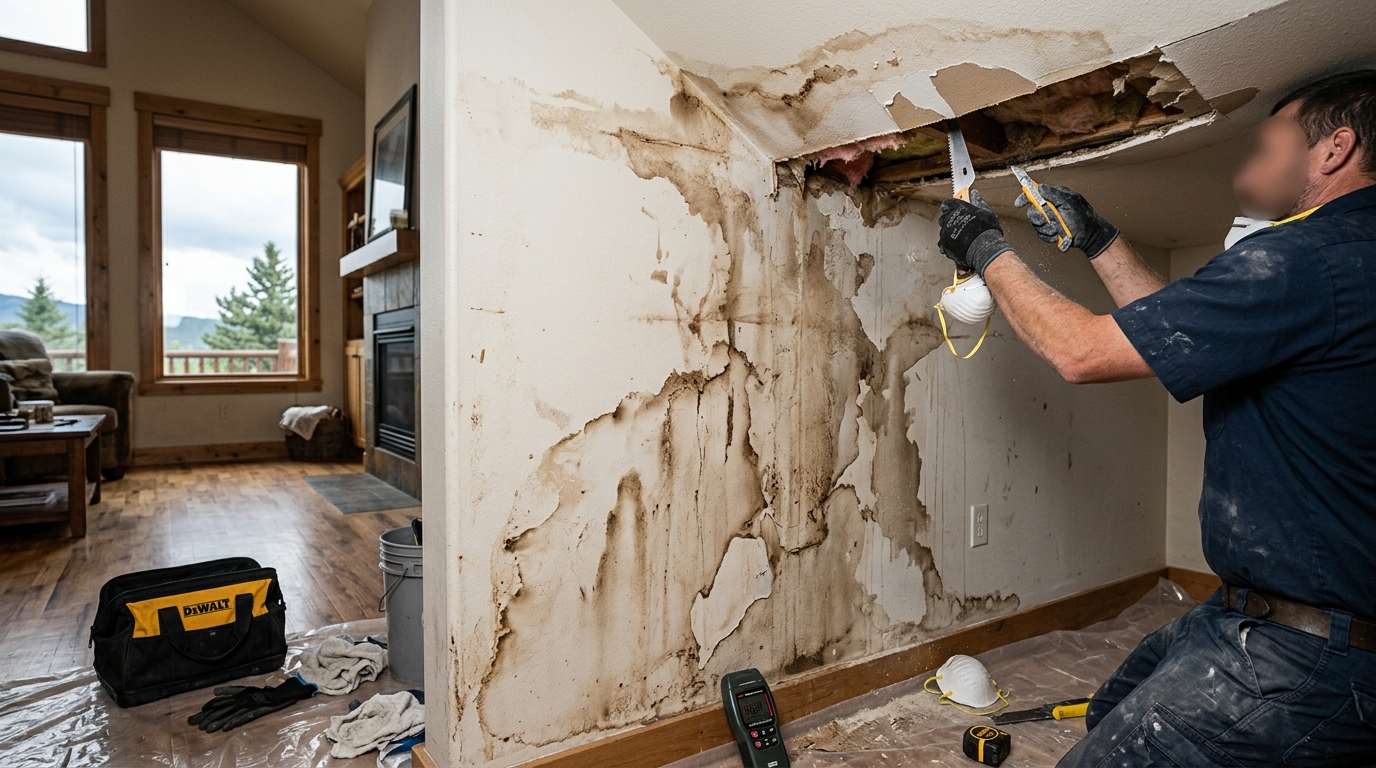
Whatever the call ends up being, hail rarely stops at the roof. When a Front Range cell works the whole building envelope, dented siding, cracked windows, and water already behind the drywall, that is the full storm and hail damage restoration with insurance documentation that keeps the roof work and the structure work under one honest scope.
Frequently asked questions
How long do you have to file a hail damage claim in Colorado?
Most Colorado homeowners policies give you a window to file after a storm, but the exact deadline is set by your specific policy, and it is commonly tied to the date of loss rather than the date you noticed the damage. Because hail bruising can hide for months, do not wait. Pull out your policy and read the property loss and notice provisions, or call your carrier and ask for the filing deadline in writing. Then get the roof documented while the evidence is fresh. The practical risk is not usually the legal deadline, it is that an adjuster months later cannot tie faint granule loss to one specific storm. A dated, slope-by-slope inspection right after the event is what protects the claim. We document hail loss the way an adjuster needs it recorded, and we do not pad scopes or misrepresent what the storm did.
Does hail damage always mean I need a new roof?
No. Plenty of hail calls end in a targeted repair, replacing a few cracked shingles, a split pipe boot, or lifted flashing, when the rest of the field tests sound. Whether you need a full replacement comes down to how much of the roof shows granule loss and bruising, the age and brittleness of the shingles, and whether this is a repeat hit. A proper inspection sorts a repair from a replacement on evidence. If a contractor calls your roof totaled without walking it slope by slope, get a second opinion before you sign anything.
What does Front Range hail do to metal roofs versus asphalt?
Asphalt shingles take the real structural hit from hail: the stones strip granules and bruise the mat, and that bruise becomes a leak over the next few seasons. Metal and standing-seam roofs usually come through the same storm with cosmetic dents and dimpling unless a seam or the finish is actually breached. That difference is why we see metal and Class 4 impact-rated shingles hold up so much better on foothills lots that take hail more than once. If you are already replacing, the Front Range is exactly the place where paying up for impact-rated material pays you back.


